The digital privacy landscape presents unique challenges for users seeking cost-free protection solutions.
While countless VPN providers advertise “free” services, the reality often involves significant limitations, data restrictions, or hidden monetization strategies that compromise user privacy.
Many individuals search for completely free VPN solutions without understanding the fundamental economics behind VPN operations. Server infrastructure, bandwidth costs, and maintenance require substantial financial resources.
Nevertheless, legitimate free VPN options do exist, though they typically come with reasonable limitations rather than exploitative practices. The key distinction lies between services offering limited free tiers and those monetizing user data.

Understanding the hidden costs of “free” VPN services
Although numerous VPN providers claim to offer free protection, many employ questionable business models that put user privacy at risk.
Free VPN services without clear revenue models often monetize through advertising networks, data collection, or selling browsing information to third parties. These practices directly contradict the privacy protection VPNs should provide.
Security researchers have discovered that several popular free VPN applications inject tracking codes, display intrusive advertisements, or maintain comprehensive logs of user activity for commercial purposes.
The fundamental concern involves how these services sustain operations without subscription revenue. Legitimate VPN infrastructure requires significant ongoing investment that cannot be maintained without income.
Currently, with cybersecurity threats advancing, selecting a trustworthy VPN provider has become increasingly critical for maintaining digital privacy and security.

Proton VPN: The premier truly free VPN alternative
While certain providers debate optimal pricing strategies for premium features, Proton VPN has established itself as the most trustworthy option for users seeking genuine zero-cost protection.
Proton VPN offers an authentic free tier without data caps, hidden fees, or privacy-compromising practices. The Swiss-based provider maintains the same privacy standards across free and paid plans.
The free tier includes unlimited bandwidth, access to servers in multiple countries, and full encryption protection. Unlike competitors, Proton VPN doesn’t monetize free users through advertising or data collection.

Free plan users receive access to servers in three countries with unlimited data transfer, making it suitable for basic privacy protection and secure browsing activities.
What limitations exist with Proton VPN’s free tier?
The complimentary Proton VPN service includes certain restrictions that differentiate it from premium subscriptions while maintaining complete privacy protection.
Free users experience limited server selection compared to paid subscribers. The service restricts access to locations in three countries, while premium users enjoy global server coverage.
Connection speeds on free servers may be slower during peak usage periods, as Proton prioritizes bandwidth for paying customers without throttling free users artificially.
The free plan supports one simultaneous device connection, whereas premium subscriptions allow multiple devices to connect concurrently for comprehensive household protection.
Advanced features like Secure Core, Tor integration, and streaming optimization remain exclusive to paid tiers, though basic privacy protection functions identically.
Does Proton VPN’s free tier compromise security?
Proton VPN applies identical security protocols across all subscription levels, ensuring free users receive the same encryption standards as premium subscribers.
The provider employs industry-standard encryption methods, maintaining a strict no-logs policy that extends equally to free and paid users regardless of subscription status.
Switzerland’s privacy-friendly jurisdiction protects all Proton VPN users under robust data protection regulations that prevent government surveillance and data retention requirements.
Open-source applications allow independent security researchers to verify Proton VPN’s privacy claims, providing transparency unavailable with closed-source competitors.
Red flags indicating untrustworthy free VPNs
Certain warning signs indicate when a “free” VPN service likely compromises user privacy or security for profit.
Excessive permissions requests that extend beyond VPN functionality suggest data collection for advertising or analytics purposes.
Intrusive advertising within the VPN application indicates monetization through tracking user behavior across websites and applications.
Vague or missing privacy policies fail to clarify data handling practices, logging policies, or information sharing with third parties.
Free services based in countries with mandatory data retention laws cannot guarantee privacy regardless of their stated policies.
Applications requiring extensive personal information for registration likely intend to monetize user data rather than protect privacy.
Should you upgrade to Proton VPN’s paid plans?
While the free tier provides adequate protection for basic privacy needs, paid subscriptions unlock substantial additional benefits worth considering.
Premium plans include access to Proton VPN’s complete server network spanning 60+ countries, enabling reliable access to geo-restricted content globally.
Higher-speed connections on premium servers deliver better performance for bandwidth-intensive activities like streaming, gaming, and large file transfers.
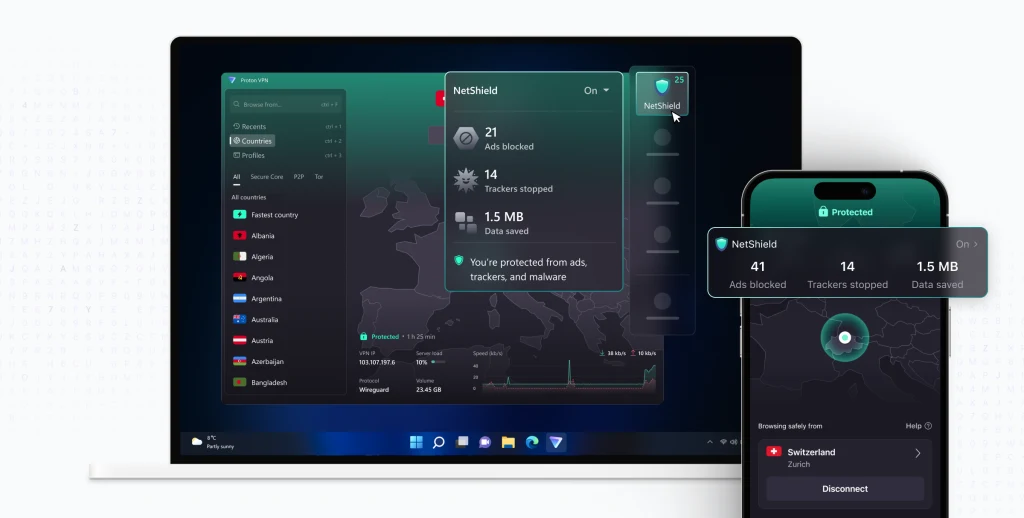
Advanced security features like Secure Core routing, NetShield ad-blocking, and protocol flexibility provide enhanced protection for security-conscious users.
Proton VPN’s paid plans support up to ten simultaneous connections, allowing comprehensive protection across all household devices.
Making informed decisions about free VPN services
Understanding VPN economics helps users identify legitimate free services versus those exploiting privacy concerns for profit.
Reputable providers offering free tiers typically operate freemium models where premium subscribers subsidize free users while maintaining identical privacy standards.
Examining privacy policies, jurisdiction, logging practices, and encryption standards reveals whether a service genuinely protects user privacy.
Independent security audits and open-source code provide verification that closed-source applications cannot offer to privacy-conscious users.
Starting with Proton VPN’s free tier allows users to experience genuine privacy protection before deciding whether premium features justify subscription costs.
Nevertheless, for users requiring maximum performance, global server access, and advanced features, investing in a reputable paid VPN service provides the most comprehensive protection available.